The global maritime commons serve as the foundational architecture for international commerce, carrying over eighty percent of global trade volume. However, this expansive, fluid domain simultaneously functions as a premier logistical corridor for transnational organized crime syndicates executing high-volume narcotics smuggling operations. Sourcing, intercepting, and prosecuting drug trafficking enterprises on the ocean presents a complex […]
The global macroeconomic infrastructure operates on an integrated contractual paradigm where risk mitigation, capital allocation, and statutory compliance continuously intersect. Within this highly structured property and casualty marketplace, ocean-going vessels and international maritime supply chains serve as high-capacity capital assets exposed to volatile navigational, meteorological, and geopolitical hazards. When an international shipping enterprise or shipowner […]
The execution of global logistics corridors, intercontinental energy transits, and massive vessel fixtures operates under a permanent, high-stakes exposure: the vulnerable state of the marine environment. Handling more than eighty percent of global trade volume, international maritime shipping carries millions of tons of persistent hydrocarbons, hazardous chemical compounds, and liquefied industrial cargoes across fragile blue-water […]
The global movement of commercial freight, offshore oil exploration, and interbank maritime credit networks depend entirely upon the physical labor of a specialized, highly exposed workforce: the merchant mariners. Operating upon the open ocean or within navigable inland channels, these professionals encounter extreme physical hazards, unyielding weather patterns, and heavy industrial machinery daily. When a […]
The geopolitical equilibrium of the global commons, the protection of international marine environments, and the economic finality of transoceanic supply lines depend upon a comprehensive constitutional framework. Statistically moving greater than eighty percent of global trade volume, maritime commerce naturally operates beyond the insular confines of terrestrial land-based state borders. When a commercial vessel or […]
The stabilization of geopolitical borders is a foundational prerequisite for international peace, economic security, and macroeconomic development. On land, once a boundary treaty is ratified and mapped, the physical coordinate points remain legally fixed, independent of shifting sands, river migration, or seismic activity. On the oceans, however, international public law establishes a completely different, structurally […]
The contemporary maritime transport sector has evolved from a predominantly mechanical industry into a highly digitized, interconnected ecosystem. Modern commercial vessels are essentially floating networks, relying continuously on integrated technology to execute navigation, cargo management, and propulsion operations. This digital transformation—driven by satellite communication networks, the Internet of Things, and automated system links—has exponentially optimized […]
The South China Sea stands as one of the most economically vital and geopolitically volatile maritime corridors on the planet. Encompassing critical sea lanes that facilitate more than one-third of global shipping transit, the region serves as a primary logistical artery for international commerce and houses vast, untapped offshore hydrocarbon reserves and rich marine fisheries. […]
The international maritime sector is undergoing a profound digital renaissance. Historically reliant on isolated mechanical operations and traditional seamanship, the modern merchant fleet now functions as a network of hyper-connected, floating industrial internet of things ecosystems. Commercial vessels routinely integrate complex information technology networks for administrative and commercial data with operational technology systems that directly […]
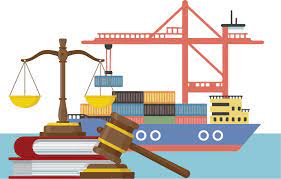
What Is Maritime Law? Admiralty law, commonly referred to as maritime law, is a particular set of rules and laws that control activities and disagreements that take place on the high seas and in navigable waterways. It covers a broad variety of legal issues pertaining to shipping, navigation, and marine resources. To control operations in […]